Mobile Casinos Embrace Shorter Sessions and Mobile-First Design
 Emily Patel
Key Takeaways:
- Europe sees accelerated shift to mobile play (projected ~67% of revenue by 2029) with demand for quick, engaging formats like crash games.
- Regulators and operators grapple with UX balancing compliance (KYC, affordability checks) and player acquisition.
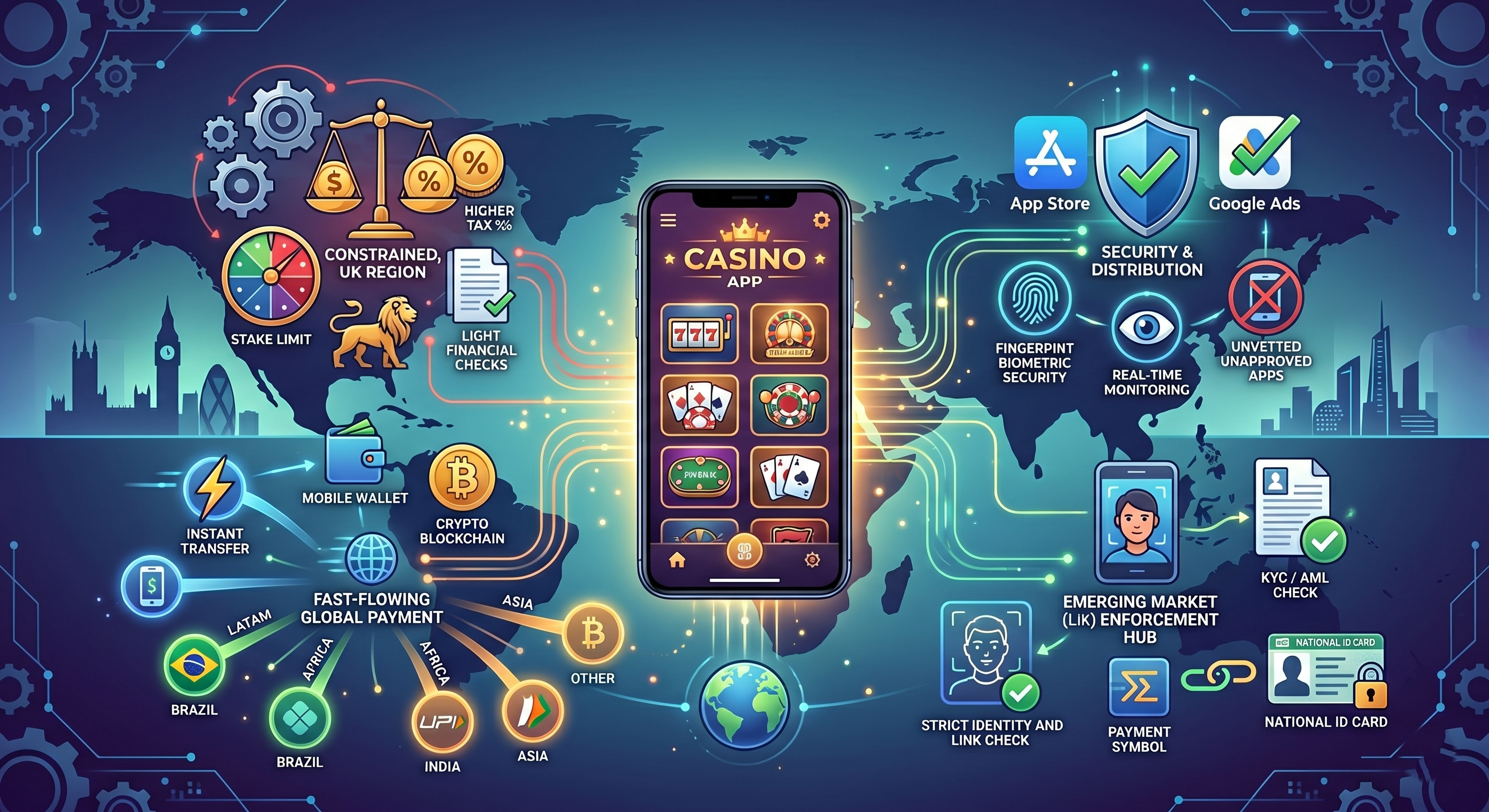
- Persistent mobile fraud threats and emerging market mobile-money integration shape security and payment strategies.
Europe’s Mobile-First Momentum Reshapes Player Behaviour
Mature European markets are undergoing a clear transition toward mobile-first gambling, driven by shorter player sessions and evolving preferences, particularly among Gen Z. Mobile devices accounted for 58% of online gambling revenue in 2024 (up from 56% prior year), with projections reaching around 67% by 2029.
Operators report strong traction in self-contained, high-engagement formats such as crash games (e.g., Aviator) and live game shows, which suit brief mobile sessions. Live casino continues gaining share, pulling players from traditional verticals, while sports betting serves as a key cross-sell opportunity. Gen Z prioritizes entertainment, social elements, gamification, and influencer-driven discovery over pure jackpot chasing, prompting adaptations in onboarding, stake structures, and content.
Regulation remains a key influence. Stricter rules in markets like Germany and the Netherlands (deposit limits, stake caps) compress regulated revenues and sustain grey-market activity, while the UK demonstrates more liberal gameplay supporting growth. Localization of payments (e.g., Trustly, Klarna) and seamless mobile experiences are critical to reducing abandonment.
UX Challenges Intensify Amid Tighter KYC and Affordability Rules
As regulators worldwide tighten identity verification and responsible gambling measures, operators face a growing tension between compliance and smooth player journeys. A recent analysis highlights how complex KYC and affordability checks risk driving legitimate players toward offshore sites if onboarding friction becomes excessive.
Best-in-class platforms are investing in streamlined UX that maintains security without alienating users, particularly as mobile remains the dominant channel. This theme aligns with broader European trends where regulation redirects rather than eliminates demand.
Africa Highlights Mobile-Native Features and Growth Potential
Africa’s iGaming sector continues emphasizing mobile-first infrastructure suited to local conditions. Recent discussions point to overlooked features that resonate with regional players, alongside strong mobile penetration and mobile-money integration driving accessibility.
Super Group, among others, is prioritizing growth in markets like Nigeria. Broader continent data underscores sports betting leadership paired with rising casino interest via smartphones.
Mobile Fraud Campaigns Target Gambling Apps
Security experts continue warning about sophisticated social-engineering operations impersonating official app stores to distribute unvetted gambling apps. Campaigns like FriendlyDealer (identified earlier but with ongoing relevance) create fake Google Play or Apple App Store interfaces tailored to device type, underscoring risks in sideloading and the need for heightened player awareness and platform vigilance.
Brazil and LatAm Regulatory and Market Dynamics
In Latin America, Brazil’s regulated market experiences ongoing adjustments, with concerns that debt-relief programs could inadvertently push blocked players toward unregulated options. Q1 data showed broad gambling growth despite volatility, reinforcing the region’s importance for mobile and localized payment strategies.
New Zealand’s Online Casino Gambling Bill, which passed final readings earlier, advances toward implementation, promising a licensed framework (up to 15 operators) expected to channel offshore activity into regulated mobile offerings.
Overall, the past week’s developments reinforce mobile as the core battleground for iGaming growth, where seamless UX, localized payments, robust security, and adaptive regulation will determine competitive success across diverse global markets.
Sources: iGaming Business, iGaming Expert, Malwarebytes, and related industry reports.